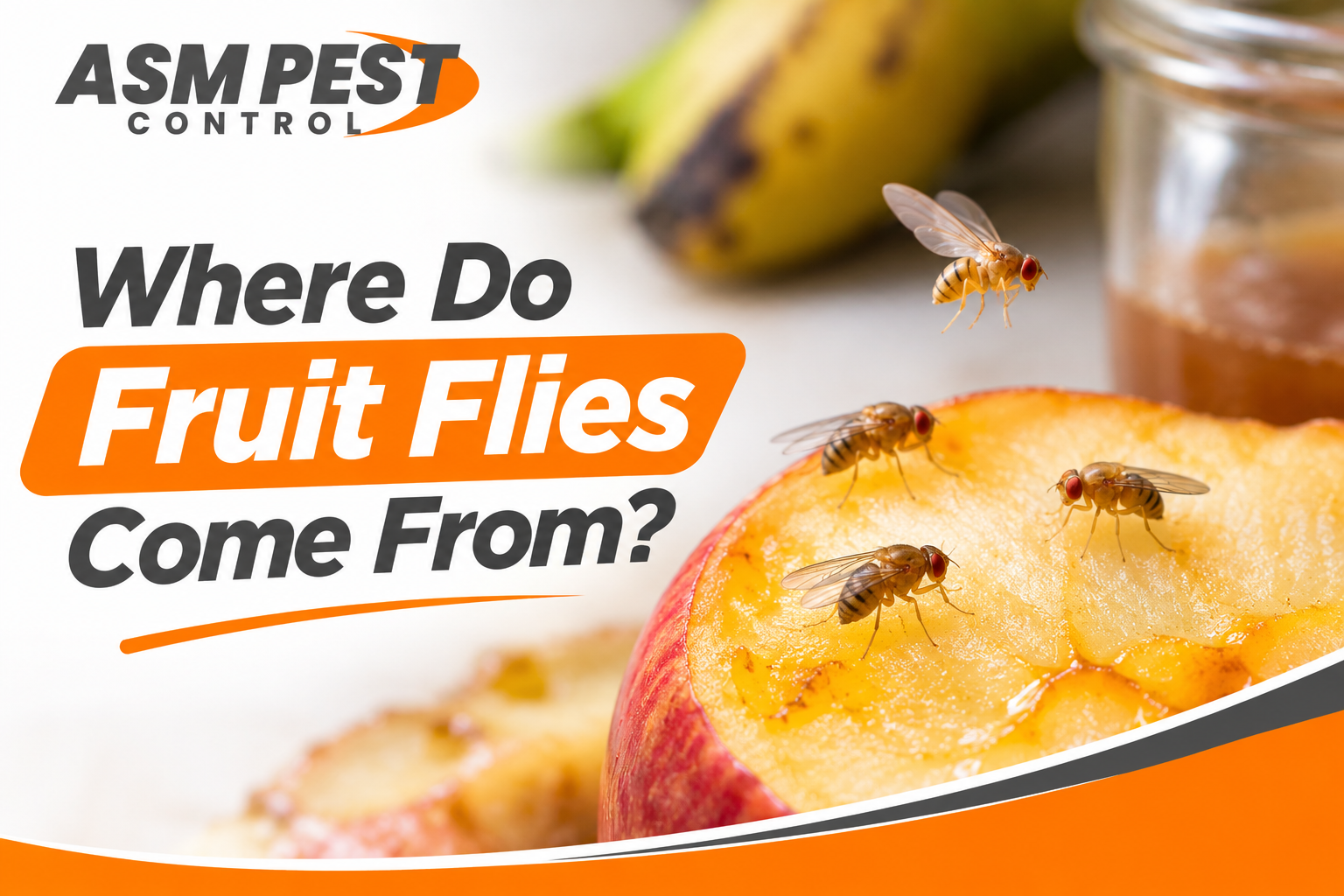
Fruit flies often appear unexpectedly in homes, especially in kitchens, dining areas, and places where food is stored. These tiny insects are attracted to ripe fruits, vegetables, fermenting foods, and damp organic waste. Although they may seem to come out of nowhere, fruit flies usually enter through open doors, windows, or contaminated produce before finding suitable places to reproduce. Identifying where do fruit flies come from is essential for understanding infestations, controlling their spread, and maintaining a clean, pest-free environment.
Where Do Fruit Flies Come From? Identifying Breeding Spots
Overripe Fruits and Vegetables
Overripe fruit and vegetables are a favourite food of fruit flies. They lay their eggs in suitable places like bananas, apples, and tomatoes. As the fruits rot, they give off sweet odors, which lure these tiny insects. Keeping the fruits item fresh and in proper storage help to eliminate their population.
Dirty Kitchen Drains
Food particles, grease, and organic waste can build up in kitchen drains. These materials can be a source of attraction to fruit flies, providing them a suitable feeding site. Not cleaning the drains regularly will multiply the fruit flies rapidly. Regular cleaning of drain openings, as well as food debris removal can help prevent infestations.
Garbage Bins and Food Waste
They are attracted to garbage bins where there is food residue and fruit peelings along with organic waste. These materials play a key role for feeding, as well as nesting. Garbage left in the open for extended periods may lead to an increase in their population. Regular and proper bin sweeping helps to perform quick action of fruit fly control Surrey.
Empty Bottles and Cans
When food products, especially beverages, have leftover juices, soda cans and other beverage bottles can be a source of fruit flies. Their presence is very common on the sweet fragrances, offering them a proper feeding ground. Washing bottles and cans before recycling will wash away the food debris and limit the risk of fruit fly.
Damp and Hidden Areas
Organic garbage accumulations in wet places may also provide breeding grounds for fruit flies. They are drawn by wet cleaning cloths, dirty mops, items of food left behind, or unwashed containers. These are the areas that are not usually considered necessary for routine cleaning. Maintaining these areas in a dry, clean environment will minimize the population and ensure long-term results for fruit fly control White Rock.
How Flies Enter a Home? Major Entry Points?
For the homeowners it is important to understand where do fruit flies come from. These flies can get into your house through small holes that are hard to see. The common places they like to enter are windows and doors, particularly if the food smells. These insects can also get inside through damaged window screens, around the door, or small cracks in the walls.
They can sometimes invade from products which you import from the supermarket, such as eggs. They can also enter inside in shopping bags and food containers. Closing doors, mending window screens, washing fresh produce, and covering food can minimize the risk of fruit flies entering your home.
Understand Fruit Fly Life Cycle for Quick Control
Egg Stage
Fruit flies start to reproduce when they lay their very small eggs in ripe fruits, vegetables, and other damp, organic matter. Due to their small size, these eggs are hard to see. They emerge rapidly in warm weather. The removal of infested food will prevent the development of new fruit fly.
Larva Stage
Once the eggs hatch, small white larvae emerge. Small worms that eat rotting fruits, vegetables, and organic waste. They are fast-growing in this phase and then proceed to the next phase. Discrading extra food and cleaning breeding areas will aid the control of their growth.
Pupa Stage
Once they have grown, larvae then migrate to nearby surfaces to pupate. During this time, they are stationary as they transform into grown-up fruit flies. Pupae tend to be near breeding materials. The bane of a beekeeper is the fly population that develops when people fail to keep the area clean of food waste.
Adult Fly Stage
After a period of pupal development, the adult fruit fly breaks out of the pupa and starts to fly around looking for food. They are drawn to ripe fruit, sweet beverages, and garbage. Female fruit flies can start laying eggs shortly after emerging from their pupae. Taking away food and breeding areas will help to prevent their numbers from growing.
Common Signs You Have a Fruit Fly Infestation
They are small insects, but are typically very noticeable. A common symptom is the presence of tiny flies around fruits, vegetables, kitchen sinks, and garbage cans. Meanwhile, you can notice them near food scraps, drains, as well as sweet beverages.
Another sign is finding fruit flies around overripe or rotting food. When a breeding site is in close proximity, they usually occur in clusters. Minor white larvae might be visible on decaying fruit or food waste. If fruit flies persist in returning after cleaning there may be an undetected breeding site. Look around drains, garbage bins, and areas where you store the food to determine where it’s coming from.
FAQs: Commonly Asked Questions
- Can fruit flies come from drains?
Yes, some small flies are caused by organic accumulation, but these are not always fruit flies, it is usually drain flies.
- Do fruit flies lay eggs on fresh fruit?
Fruit flies generally prefer ripe, damaged, or fermenting produce, where suitable conditions support egg development and larval feeding.
- How quickly do they multiply?
They have a very quick life cycle. They can develop within one to two weeks under good breeding conditions, resulting in an increasing population.
Stop Fruit Flies Before They Multiply!
Are fruit flies making your kitchen uncomfortable? Prevent recurring infestations by addressing hidden breeding spots before the problem grows. ASM Pest Control provides professional pest management solutions to identify problem areas and control unwanted pests effectively. Protect your kitchen, maintain better hygiene, and enjoy a cleaner, fresher, and more comfortable home with reliable pest control services you can trust.